




HP Omnibook 7 Aero 13-bg
Especificaciones de Portátil(es)
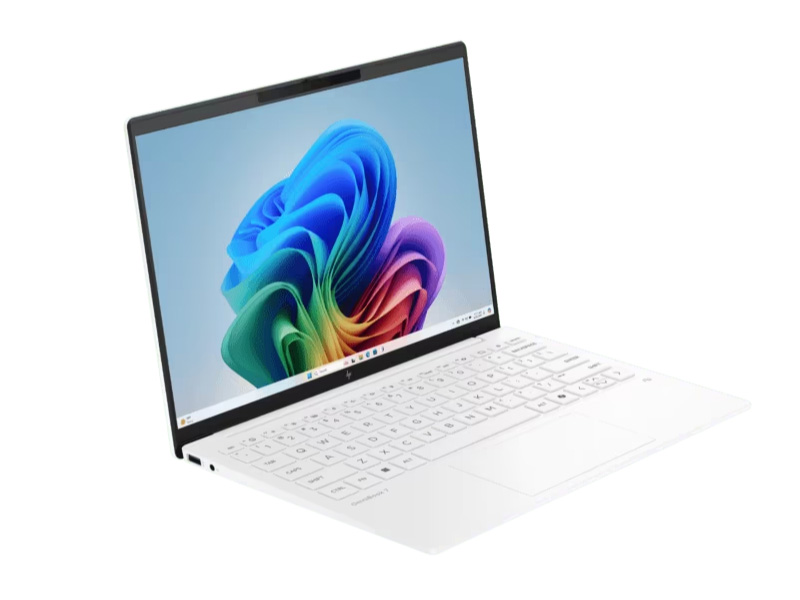
Cámara principal: 5 MPix
Price comparison
Promedio de 3 puntuaciones (de 7 análisis)
Análisis para el HP Omnibook 7 Aero 13-bg
Origen: Techradar
 EN→ES
EN→ESThere’s a lot to like with the HP OmniBook 7 Aero, from its portability and somewhat unique look to its surprisingly robust performance. I would definitely recommend it as one of the best laptops out there for anyone wanting a lightweight Windows laptop to take on the road. I also appreciate the port selection offered, as the best Ultrabooks typically come pretty limited in this department, usually limiting you to two USB-C ports. Digital nomads will like the quality of the webcam as well as the fact that it has a physical shutter. Really, it doesn’t feel like the thin and light nature of the HP OmniBook 7 Aero compromises on too much to get to its size or price point.
Único Análisis, disponible online, Mediano, Fecha: 02/26/2026
Puntuación: Puntuación total: 90% precio: 80% rendimiento: 90% movilidad: 80% procesamiento: 90%
Origen: PC World
EN→ESThe HP OmniBook 7 Aero is a little marvel of a laptop. At 2.2 pounds with a beautiful white all-metal design, I loved using it, and I loved picking it up and moving it around. It stayed cool and quiet, too. Unfortunately, HP’s decision to include a small battery—possibly to keep the weight down —feels like a compromise that impairs the usability of this machine. I loved this laptop the first time I touched it, but I winced when I saw the battery spec: 43 Watt-hours is just too low for this AMD chip. This number used to be fine but, in a post-Lunar Lake and post-Qualcomm Snapdragon X world, this is low. If you’ll never be far from an outlet and you want more multithreaded CPU performance than Intel’s Lunar Lake can deliver, this might be the ideal laptop for you.
Único Análisis, disponible online, Longitud Desconocida, Fecha: 11/04/2025
Puntuación: Puntuación total: 90%
Origen: XDA Developers
EN→ESI rather enjoyed my time with the HP OmniBook 7 Aero more than I expected. It has enough power to keep up with my average workday and sufficient battery life to last around 10-12 hours on a single charge. The only major drawbacks to the OmniBook 7 Aero are its dull, lifeless display and expensive upgrades. However, it's a great deal if you can get it on sale or if you're willing to opt for the Ryzen AI 5 340 configuration. If you need a laptop with a highly accurate display, the Asus Zenbook S 14's OLED display panel makes it a significantly better option that gets roughly the same amount of battery life and similar performance. Meanwhile, if you need to stay on a tight budget, the HP OmniBook 5 is a far better deal. But if you're looking for a powerful, lightweight laptop to commute with, the featherweight OmniBook 7 Aero is hard to beat.
Único Análisis, disponible online, Mediano, Fecha: 11/02/2025
Puntuación: Puntuación total: 80%
Origen: Andrew Marc David
Único Análisis, disponible online, largo, Fecha: 10/11/2025
Origen: Tweakers
 NL→ES
NL→ESHands-On, disponible online, corto, Fecha: 06/11/2025
Origen: VNReview
 VN→ES
VN→ESÚnico Análisis, disponible online, corto, Fecha: 07/22/2025
Origen: Zing
VN→ESÚnico Análisis, disponible online, corto, Fecha: 07/22/2025
Comentario
AMD Radeon 860M: Una iGPU de arquitectura RDNA 3.5 bastante potente que debutó a principios de 2025 y que es sucesora directa de la Radeon 760M. Sus 8 CUs/WGPs (512 sombreadores unificados) funcionan hasta a 3 GHz. Es compatible con DX12 Ultimate, trazado de rayos, generación de imágenes de IA y otras funciones modernas, así como con muchos códecs de vídeo populares, entre los que se incluyen, en primer lugar, AVC, HEVC, VP9 y AV1. Su rendimiento en juegos es lo suficientemente bueno para jugar a juegos 2024 en ajustes gráficos bajos.
Estas tarjetas también deben ser capaces de aguantar todos los juegos actuales, pero la mayoría de ellos en configuraciones de detalles medios y bajos y con bajas resoluciones. Juegos más antiguos, o menos exigentes todavía pueden ser jugados con buena calidad de gráficos.
>> Más información puede ser encontrada en nuestra comparación de tarjetas gráficas moviles y la lista de benchmarks.
Ryzen AI 7 350: Un procesador relativamente potente de la familia Krackan Point que se presentó a principios de 2025. La APU integra 8 núcleos de CPU (4 núcleos Zen 5 de hasta 5 GHz y 4 núcleos Zen 5c de hasta 3,5 GHz).
>> Más información puede ser encontrada en nuestra comparación de procesadores móviles.
 Add as a preferred source on Google


