




Asus Taichi 21-CW001H
Especificaciones de Portátil(es)
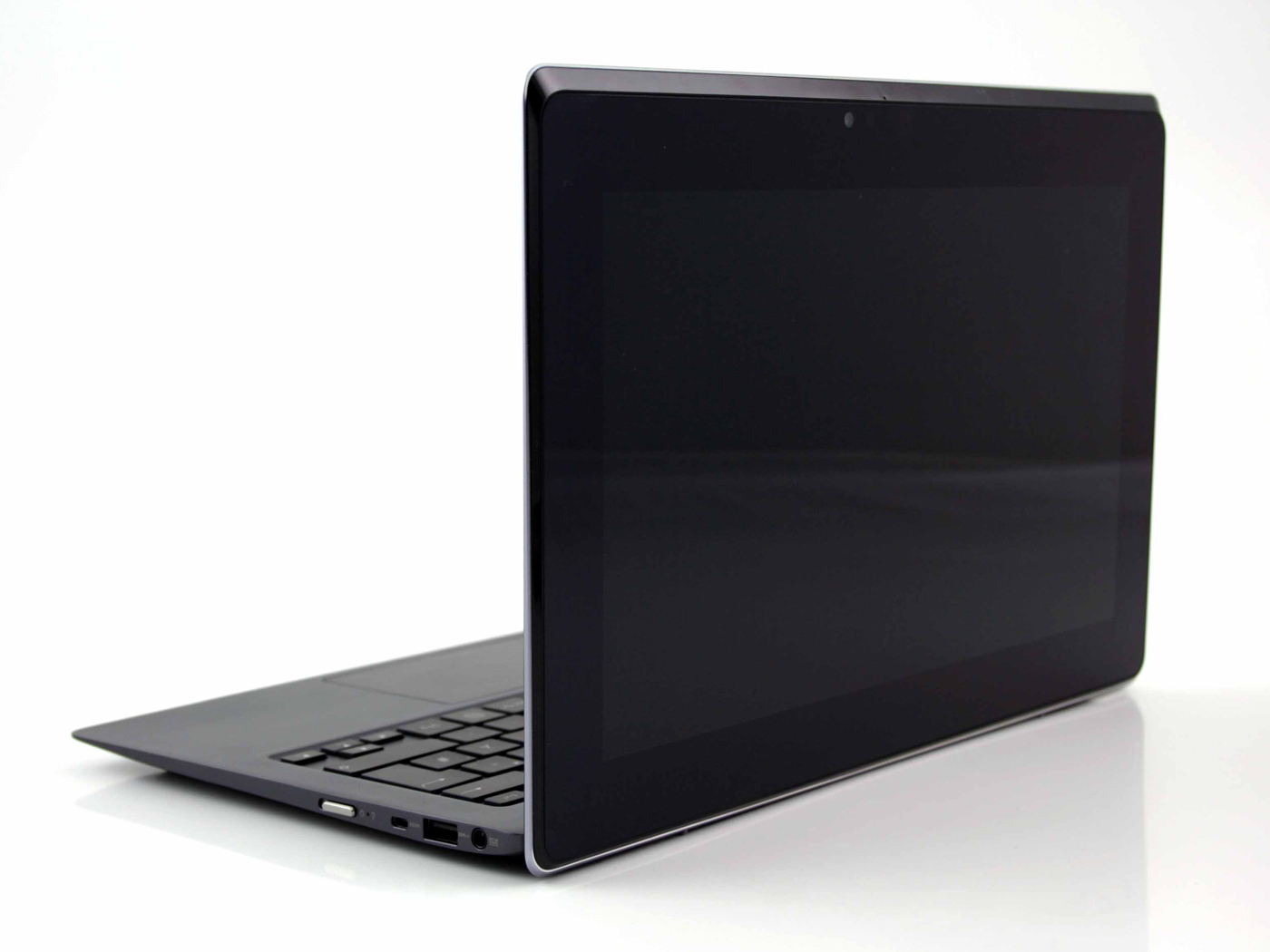
Asus Taichi 21-CW001H (Taichi 21 Serie)
Procesador
Intel Core i7-3517U 2c/4t 2 x 1.9 - 3 GHz, Ivy Bridge
Adaptador gráfico
Intel HD Graphics 4000, Núcleo: 1150 MHz
Memoría
4 GB
, Dual Channel
pantalla
11.60 pulgadas 16:9, 1920 x 1080 pixels, WUXGA glare Multi-Touch LED TFT, CMN N116HSG WJ1 (Innen), IPS, FHD IPS Innen + Außen / matt bzw. glare, lustroso: no
Placa base
Intel QS77 (Panther Point)
Disco duro
SanDisk SD5SE2256G1002E, 256 GB
, SATA III
Tarjeta de sonido
HD Audio
Conexiones
2 USB 3.0, 1 VGA, 1 HDMI, Audio Conexiones: Line-Out/Kopfhörer kombiniert, Sensores: Lagesensor für Tablet-Funktion, Micro VGA / HDMI, Wireless Display Support
Equipamento de red
Intel Centrino Advanced-N 6235 (a/b/g/n = Wi-Fi 4/), Bluetooth 4.0
Tamaño
Alto x ancho x profundidad (en mm): 17.4 x 306.6 x 199.3
Battería
35 Wh Litio-Polimero, Duración de la Batería (según el fabricante): 5 h
Sistema Operativo
Microsoft Windows 8 64 Bit
Cámara
Webcam: Front HD 1280x720 / Rear 5 MP Auto Focus 2592x1944
Características adicionales
Altavoces: 2 x Stereo Bang & Olufsen ICEpower, Teclado: Chiclet, Luz de Teclado: si, Adapter: Micro VGA auf VGA, USB auf Ethernet RJ45 100 Mbit, Asus Cloud, Screen Share, Taichi Essentials, Converter, Calculator, Instant Connect, Live Update, InstantOn, 12 Meses Garantía
Peso
1.254 kg, Suministro de Electricidad: 187 g
Precio
1599 Euros
Price comparison
Puntuación Media:
Promedio de 8 puntuaciones (de 9 análisis)
Promedio de 8 puntuaciones (de 9 análisis)
precio: 50%, rendimiento: 75%, características: 63%, pantalla: 90% movilidad: 86%, procesamiento: 86%, ergonomía: 78%, emisiones: 86%
Análisis para el Asus Taichi 21-CW001H
Review Asus Taichi 21 Convertible Ultrabook | Notebookcheck
Revolutionary. One device designed for all jobs. Browsing, presentations, typing, mobility and working with a partner. The simple idea of installing a dual-TFT on the front and rear is to revolutionize using a Windows PC.
Revolutionary. One device designed for all jobs. Browsing, presentations, typing, mobility and working with a partner. The simple idea of installing a dual-TFT on the front and rear is to revolutionize using a Windows PC.
ASUS Taichi 21 notebook review
Origen: APC Mag EN→ES Archive.org version
We’re used to seeing interesting designs when it comes to Windows 8 tablets and convertibles, but the Taichi takes the cake for originality.We’re not sold on the idea of twin displays and it’s obviously come at the cost of other components. If you can find a good reason to use both screens, there’s nothing else quite like the Taichi, although it feels more of a proof of concept than a usable solution.
Único Análisis, disponible online, corto, Fecha: 04/09/2013
Puntuación: Puntuación total: 70%
Origen: APC Mag
EN→ES Archive.org versionWe’re used to seeing interesting designs when it comes to Windows 8 tablets and convertibles, but the Taichi takes the cake for originality.We’re not sold on the idea of twin displays and it’s obviously come at the cost of other components. If you can find a good reason to use both screens, there’s nothing else quite like the Taichi, although it feels more of a proof of concept than a usable solution.
Único Análisis, disponible online, corto, Fecha: 04/09/2013
Puntuación: Puntuación total: 70%
Asus Taichi 21
Origen: Computer Shopper EN→ES Archive.org version
There's little arguing the fact that the Taichi is a well-built premium laptop. And both of its screens are of excellent quality. But like pretty much every hybrid or convertible we've seen so far, its split personality results in a compromised experience on both sides. As a tablet, the Taichi is powerful and responsive, but it's also about twice as heavy as most similarly sized dedicated tablets. And battery life is also pretty short by tablet standards.
Único Análisis, disponible online, largo, Fecha: 02/22/2013
Puntuación: Puntuación total: 70%
Origen: Computer Shopper
EN→ES Archive.org versionThere's little arguing the fact that the Taichi is a well-built premium laptop. And both of its screens are of excellent quality. But like pretty much every hybrid or convertible we've seen so far, its split personality results in a compromised experience on both sides. As a tablet, the Taichi is powerful and responsive, but it's also about twice as heavy as most similarly sized dedicated tablets. And battery life is also pretty short by tablet standards.
Único Análisis, disponible online, largo, Fecha: 02/22/2013
Puntuación: Puntuación total: 70%
Asus Taichi 21
Origen: Techreview Source EN→ES Archive.org version
Windows 8 opened up new possibilities for mobile computing and the Asus Taichi 21 takes advantage of this. It has dual 11.6-inch 1080p displays where the second on the back of the primary display acts as a tablet when closed. Both of the displays look really good but the battery life is short. Asus really tried to keep the Taichi 21 light and compact and they certainly succeeded. It measures 12.1 x 7.8 x 0.7-inches (wdh) and weighs just shy of 3-pounds. The design is also eye-pleasing with an aluminum keyboard deck, sides and bottom with tapering edges to finish it off. Our only design question was why Asus put such a thick bezel around the primary display.
Único Análisis, disponible online, Muy corto, Fecha: 01/28/2013
Puntuación: Puntuación total: 60%
Origen: Techreview Source
EN→ES Archive.org versionWindows 8 opened up new possibilities for mobile computing and the Asus Taichi 21 takes advantage of this. It has dual 11.6-inch 1080p displays where the second on the back of the primary display acts as a tablet when closed. Both of the displays look really good but the battery life is short. Asus really tried to keep the Taichi 21 light and compact and they certainly succeeded. It measures 12.1 x 7.8 x 0.7-inches (wdh) and weighs just shy of 3-pounds. The design is also eye-pleasing with an aluminum keyboard deck, sides and bottom with tapering edges to finish it off. Our only design question was why Asus put such a thick bezel around the primary display.
Único Análisis, disponible online, Muy corto, Fecha: 01/28/2013
Puntuación: Puntuación total: 60%
Asus Taichi Review
Origen: V3.co.uk EN→ES Archive.org version
Overall, the Asus Taichi handled the Windows 8 OS very well, with very little lag when swiping between live tiles, and programs popped up almost as soon as we selected them. However, after installing a number of applications and storing a sufficient amount of data, we can imagine that it could slow down a bit.
Único Análisis, disponible online, Mediano, Fecha: 01/11/2013
Puntuación: Puntuación total: 60%
Origen: V3.co.uk
EN→ES Archive.org versionOverall, the Asus Taichi handled the Windows 8 OS very well, with very little lag when swiping between live tiles, and programs popped up almost as soon as we selected them. However, after installing a number of applications and storing a sufficient amount of data, we can imagine that it could slow down a bit.
Único Análisis, disponible online, Mediano, Fecha: 01/11/2013
Puntuación: Puntuación total: 60%
Asus Taichi review
Origen: Techradar EN→ES Archive.org version
The Asus Taichi stands up as a supremely desirable piece of consumer tech that acts as a sterling showcase for Microsoft's Windows 8 operating system. Both power and usability are first class, and the design - as we've come to expect from Asus - really is head-turning. The Asus Taichi works better as a laptop than a tablet, but it's one of the best examples we've yet seen of marrying the two form factors together.
Único Análisis, disponible online, largo, Fecha: 12/06/2012
Puntuación: Puntuación total: 80%
Origen: Techradar
EN→ES Archive.org versionThe Asus Taichi stands up as a supremely desirable piece of consumer tech that acts as a sterling showcase for Microsoft's Windows 8 operating system. Both power and usability are first class, and the design - as we've come to expect from Asus - really is head-turning. The Asus Taichi works better as a laptop than a tablet, but it's one of the best examples we've yet seen of marrying the two form factors together.
Único Análisis, disponible online, largo, Fecha: 12/06/2012
Puntuación: Puntuación total: 80%
Asus Taichi Review
Origen: Stuff TV EN→ES Archive.org version
The Taichi’s screen-on-screen action could be exactly what some people want – be they business types, show-offs or just wildly popular Ultrabook users who never get any peace from their adoring fans. It is a touch too unwieldy to use as a touchscreen tablet to justify that £1200 price tag, but it’s already available for less so you may not have to stretch right up to the RRP.
Único Análisis, disponible online, Muy corto, Fecha: 12/01/2012
Puntuación: Puntuación total: 80%
Origen: Stuff TV
EN→ES Archive.org versionThe Taichi’s screen-on-screen action could be exactly what some people want – be they business types, show-offs or just wildly popular Ultrabook users who never get any peace from their adoring fans. It is a touch too unwieldy to use as a touchscreen tablet to justify that £1200 price tag, but it’s already available for less so you may not have to stretch right up to the RRP.
Único Análisis, disponible online, Muy corto, Fecha: 12/01/2012
Puntuación: Puntuación total: 80%
Asus Taichi review
Origen: PC Pro EN→ES Archive.org version
Many manufacturers are struggling to find the most natural meeting point between the tablet and the laptop, and Asus’ own Windows 8 range provides yet more evidence of this. With its VivoBooks marrying touchscreens to standard laptops, the forthcoming VivoTab range mimicking the separate tablet and keyboard dock concept of the Android-powered Transformer Pad, and the Taichi 21 ploughing its own dual-screened furrow, it seems even Asus isn’t confident enough to put all of its eggs in one basket. Give it a few years and a refined, lighter chassis married with more power-efficient CPUs and improved battery life could see this dual-screened form factor present a compelling hybrid. At present, though, Asus’ Taichi 21 feels like a bold, innovative concept that’s just a little too far ahead of its time.
Único Análisis, disponible online, corto, Fecha: 11/22/2012
Puntuación: Puntuación total: 67% precio: 50% rendimiento: 67% características: 67% ergonomía: 67%
Origen: PC Pro
EN→ES Archive.org versionMany manufacturers are struggling to find the most natural meeting point between the tablet and the laptop, and Asus’ own Windows 8 range provides yet more evidence of this. With its VivoBooks marrying touchscreens to standard laptops, the forthcoming VivoTab range mimicking the separate tablet and keyboard dock concept of the Android-powered Transformer Pad, and the Taichi 21 ploughing its own dual-screened furrow, it seems even Asus isn’t confident enough to put all of its eggs in one basket. Give it a few years and a refined, lighter chassis married with more power-efficient CPUs and improved battery life could see this dual-screened form factor present a compelling hybrid. At present, though, Asus’ Taichi 21 feels like a bold, innovative concept that’s just a little too far ahead of its time.
Único Análisis, disponible online, corto, Fecha: 11/22/2012
Puntuación: Puntuación total: 67% precio: 50% rendimiento: 67% características: 67% ergonomía: 67%

두 개의 창으로 강력한 모바일 PC를 즐겨라 - ASUS TAICHI (외형편)
Origen: Notegear KO→ES Archive.org version
Único Análisis, disponible online, Muy largo, Fecha: 01/07/2013
Origen: Notegear
KO→ES Archive.org versionÚnico Análisis, disponible online, Muy largo, Fecha: 01/07/2013
Comentario
Intel HD Graphics 4000: Tarjeta de video de procesador de gama alta de los modelos Ivy Bridge. Ofrece una frecuencia diferente en los diferentes modelos de CPU (ULV a quad core de desktop) y, por tanto, un rendimiento diferente.
Algunos juegos actuales no fastidiosos pueden ser jugados fluidamente con pequeños detalles.
>> Más información puede ser encontrada en nuestra comparación de tarjetas gráficas moviles y la lista de benchmarks.
3517U: Veloz CPU ULV basado en Ivy-Bridge en el segundo trimestre de 2012. Ofrece una frecuencia de 1,9 - 3,0 GHz y un GPU HD 4000 (350 - 1150 MHz). El TDP es de 17 W.
>> Más información puede ser encontrada en nuestra comparación de procesadores móviles.


